


Cable connection links new 380 kV substation in Tilburg to the regional grid
For the new 380 kV high‑voltage substation in Tilburg, major work was required not only above ground. Underground, a crucial connection plays a key role in the reliable operation of the grid. Prysmian Netherlands designed and delivered the underground cable system that connects the new 380 kV substation to the existing Tilburg‑North substation.
From design to commissioning
Prysmian was responsible for the complete cable system, covering basic design, production of cables and accessories, installation, testing, and handover to grid operator TenneT. Throughout the project, the system was considered as a whole, with a strong focus on technical performance, reliability, and constructability.
During the design phase, an aluminium conductor with a cross‑section of 4000 mm² was selected as an equivalent alternative to the originally specified 2500 mm² copper conductor. This solution is lighter, more cost‑efficient, and based on proven technologies. Following successful production and testing of a trial cable in accordance with TenneT specifications and applicable Dutch standards, the solution was implemented in Tilburg. The commercial application of an aluminium conductor of this size is a world first.
Underground installation
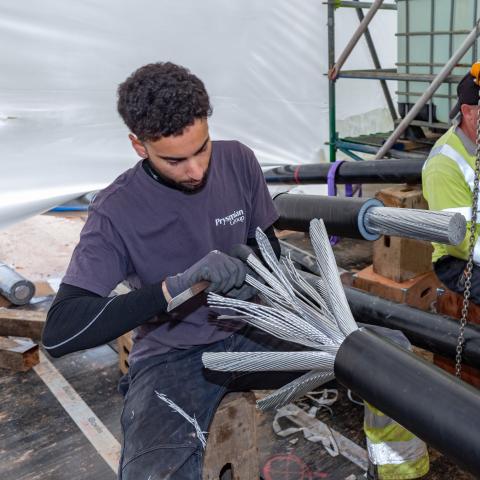
The connection consists of a double circuit with a total length of 2.8 kilometres. It was installed beneath roads and farmland using three horizontal directional drillings (HDDs) ranging from 550 to 800 metres in length. Each drilling contains four plastic ducts: three for the 150 kV cables and one for communication and grounding equalisation cables. Cable joints were installed between the drillings to connect the cable sections.
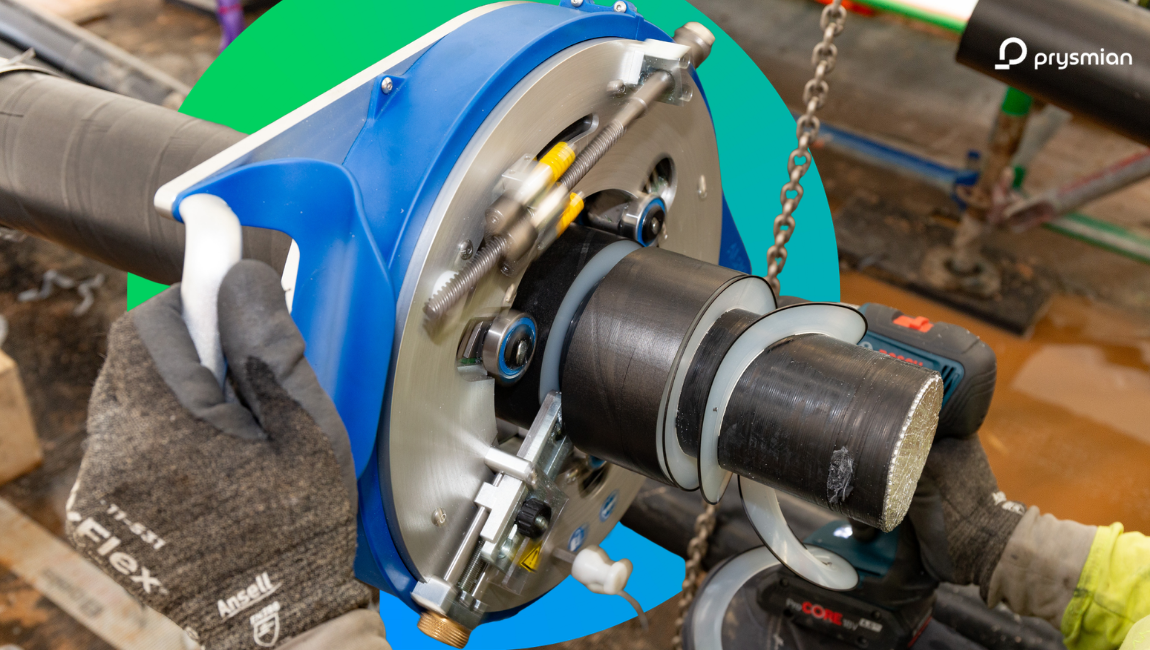
Click‑Fit accessories were used for these joints. These prefabricated solutions increase installation reliability and reduce the risk of assembly errors, even when working with cables that are larger than standard.
Testing and quality
Before installation, an extensive test programme was carried out at the factory. Cables, joints, and terminations were fully assembled and electrically tested in accordance with TenneT specifications and the NEN‑HD 632 standard. After installation on site, additional testing was performed, including high‑voltage testing using a mobile resonant transformer, impedance measurements, and verification of the grounding concept. This thorough approach is essential for cable systems designed to operate reliably for fifty years or more.
Reliable infrastructure for the future
The cable connection in Tilburg demonstrates how proven technologies and innovative solutions can be successfully combined. Through close cooperation with TenneT and other project partners, a future‑proof connection has been realised, contributing to a reliable energy infrastructure for today and tomorrow.